SANTONS
Santons
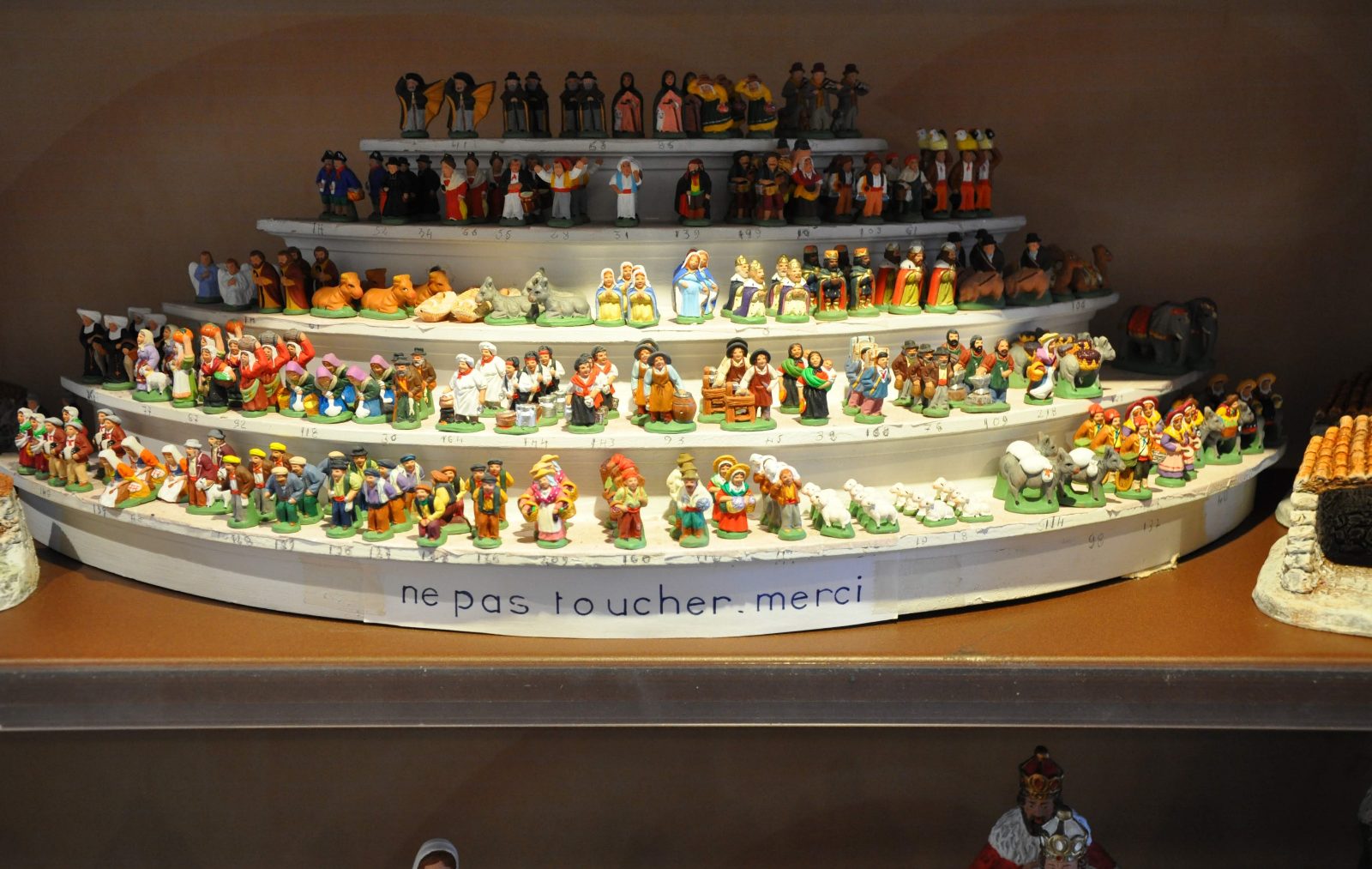
Santons are the small clay nativity figures of Provence. The name comes from the Provençal santoun, “little saint.” A santon nativity has the Holy Family, but also a whole village around it: the miller, the fishwife, the blind man and his son, and many more. That’s what makes the Provençal nativity different.
How santons began
Santons started out of necessity. During the French Revolution, churches were closed and public nativity scenes disappeared, so families brought the nativity home, and they needed figures they could afford. In Marseille, Jean-Louis Lagnel (1764–1822) began making molded santons in unfired clay that sold for a few pennies. The idea caught on, Marseille’s santon fair started in 1803, and within a generation the nativity had moved from the church into the family home. In 2021, santon making was added to France’s national inventory of intangible cultural heritage. We explain what that does and doesn’t mean on our page about the nativity scene and UNESCO.
Then came the theater. The pastorales, Christmas plays in Provençal about villagers walking to the stable (the best known is the Pastorale Maurel of 1844), made village characters like the boumian and Pistachié famous, and santon makers brought them into the nativity. The ravi is often said to come from them too, but that’s doubtful. Read the full history.
Clay, plaster, fabric
There are four main types, and they’re easy to tell apart once you know what to look for.
| Type | Look | Best for |
|---|---|---|
| Painted unfired clay | Matte and slightly chalky. The lightest type. Water damages it. | The oldest tradition. Scratches easily. |
| Painted fired clay | Solid, rings when tapped, and you can see the clay color under the paint at the edges. | The most common type. Sturdy, easy to clean, lasts for generations. |
| Biscuit | Unpainted terra-cotta in a warm reddish brown. | A style choice. Looks beautiful in a large scene. |
| Dressed santon | Clay head and hands, with clothes sewn from real fabric. | Larger sizes. Stunning but pricey, and sensitive to dust and sunlight. |
What about plaster? At flea markets and antique shops you’ll still see painted plaster figures called santibelli. They’re related to santons but aren’t the same thing: they come from the small religious statues peddlers sold door to door in the 19th century, not from the nativity tradition. (Many Italian immigrants brought this craft to American cities.)
How to choose
Make three choices, in this order. The first two are hard to change later. The third isn’t.
-
Size
Pick this first, because everything else in your scene is built to match it. Switching sizes later means starting over. The most common size is 7 cm (about 2¾ inches), and it has the widest choice of characters. See the size guide.
-
Style
Painted clay or dressed, Provençal or Neapolitan, bright or subdued. Mixing two styles in one scene always shows, unless you do it on purpose and keep each group in its own area.
-
Characters
No need to rush here. Most families build their nativity over the years, adding one or two santons each Christmas. It’s the nicest way to do it, too: every figure comes with a memory. See who’s who.
To start, you only need five pieces: Mary, Joseph, Baby Jesus, the ox and the donkey. Everything else can wait, even the Wise Men, who don’t arrive until Epiphany anyway. For more, see your first nativity scene.
How to spot a good santon
You don’t need to be an expert. Pick up the santon and check these five things. It takes thirty seconds:
- The mold seam. It runs down the sides. On a well-made piece it’s smoothed away and you can’t see it. On a careless one, you can feel it with your finger.
- Sharp details. Molds wear out. Figures made from a worn mold have soft folds, blurry fingers and a less clear face. Compare two copies of the same santon in the same bin, and you’ll see they aren’t identical.
- The eyes. They’re the hardest thing to paint. Two eyes at the same height, looking the same way, are the sign of an experienced painter.
- The base. It should be flat, steady and wide enough. If a santon tips over on a flat table, it will tip even more easily on a hillside.
- The sound. Tap a fired santon with your fingernail and it rings clear. A dull sound can mean a crack inside.
Don’t judge by shine. Traditional santons are matte. A glossy varnish is a factory shortcut, not a sign of quality.
The best way to train your eye is to compare, and a museum does that better than a shop: figures from different workshops and eras, side by side in the same display case. See the santon museums.
What santons cost, and why
Prices vary too much by country, workshop and year to quote numbers here. But what drives the price stays the same, and it’s worth knowing.
- The work matters more than the size. A 3½-inch (9 cm) santon doesn’t cost much more than a 2¾-inch (7 cm) one, but a dressed santon of the same size costs several times more.
- Painting is the biggest cost. Molding a clay santon takes a few minutes. Painting it takes much longer. The number of colors and the fineness of the detail explain the price gap between two otherwise identical figures.
- Large and one-of-a-kind pieces (sculpted by hand rather than molded, and signed) are priced like sculpture, which is a different market.
- Don’t buy in bulk. A box of thirty santons for the price of three handmade ones gets you thirty lifeless figures. Five carefully chosen santons are worth more.
Buying straight from the workshop, at a santon fair or in a santon maker’s shop, often costs about the same as a big store, for a far better piece. And you can ask the maker why each character is dressed the way he is. From the U.S., many santon makers in our directory ship internationally or sell through importers, so just ask before you order. Meet the santon makers.